



Can two vehicles built in the same year, priced for similar buyers, and aimed at everyday transportation really be competing for the same driveway? On paper, the 2026 Chevrolet Trax and the 2026 Nissan Sentra couldn’t be more different. One is a compact crossover with SUV cues and added versatility. The other is a traditional compact sedan rooted in efficiency and road manners.
Yet in today’s market, where buyers are less concerned with categories and more focused on how a car fits into daily life, these two end up cross-shopped more often than expected. The real decision isn’t about horsepower figures or cargo measurements. It’s about lifestyle, driving habits, and how you want your car to feel every single day.
Two Philosophies of Everyday Transportation
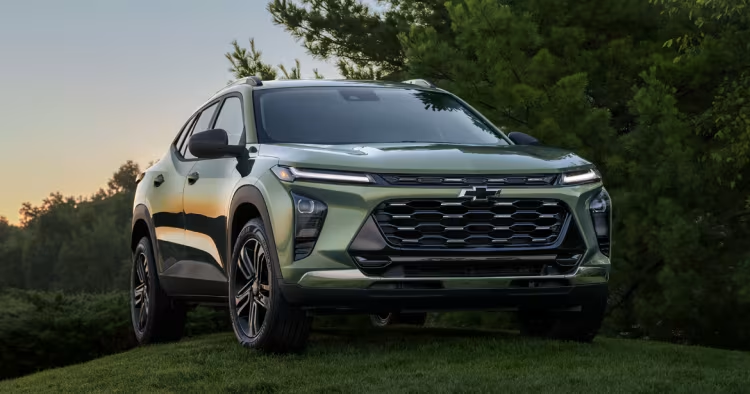
The Chevrolet Trax represents the modern shift toward compact crossovers. It doesn’t try to be rugged or adventurous in a traditional SUV sense. Instead, it focuses on approachability—easy access, upright seating, and a layout that makes daily tasks feel simpler. From grocery runs to weekend errands, the Trax positions itself as a flexible companion rather than a performance statement.
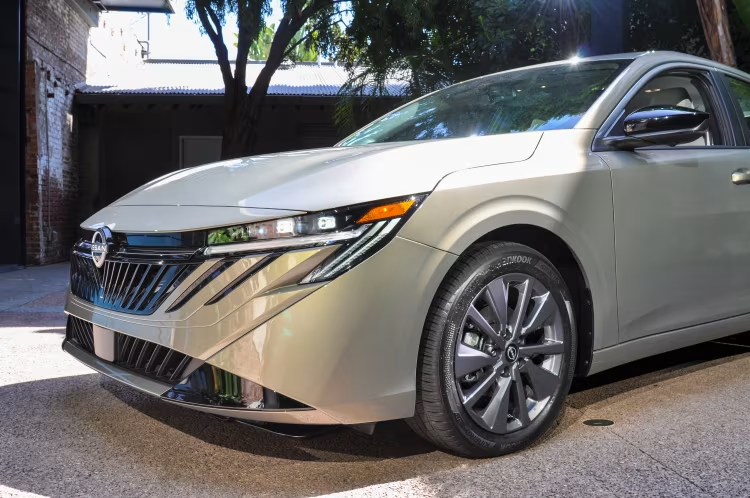
The Nissan Sentra stays loyal to the compact sedan formula that has served commuters for decades. Lower to the ground, more aerodynamic, and intentionally straightforward, it emphasizes predictability and efficiency. It’s designed for drivers who want a calm, composed experience without excess bulk or unnecessary complexity.
Both aim to reduce friction in everyday driving, but they go about it in very different ways.
Driving Position and Visibility: Where the Trax Makes Its Case
One of the Trax’s biggest advantages is immediately noticeable the moment you sit inside. The elevated driving position offers a clearer view of traffic and surroundings, which many drivers find reduces stress in congested urban environments. Visibility over the hood is better, intersections feel easier to judge, and lane positioning requires less effort.
This commanding seating posture also makes entry and exit more comfortable, especially for drivers who dislike dropping down into low sedans. For families, rideshare drivers, or anyone frequently hopping in and out throughout the day, this matters more than brochures often suggest.
The Sentra’s seating position, by contrast, is traditionally sedan-low. While that reduces outward visibility slightly, it creates a more connected feeling to the road. For drivers who enjoy a planted sensation and clearer feedback through the chassis, this lower stance remains appealing.
Ride Quality and Daily Comfort
The 2026 Trax leans deliberately toward comfort. Its suspension tuning prioritizes absorbing potholes, expansion joints, and uneven pavement—exactly the imperfections found on real-world roads. At city speeds, it feels relaxed and forgiving, encouraging a smooth, unhurried driving style.
The Sentra counters with a more composed ride at speed. Its lower center of gravity helps it remain stable on highways, especially during longer commutes. Wind movement is more controlled, and the car tends to track straight with minimal correction, which can reduce fatigue on extended drives.
Neither vehicle is sporty in the traditional sense, but each delivers comfort in its own way. The Trax cushions the road. The Sentra manages it.

Maneuverability and Urban Practicality
In tight urban settings, the Sentra’s compact footprint works in its favor. Parallel parking is less intimidating, narrow streets feel manageable, and tight garages pose fewer challenges. Its turning behavior is predictable, making it easy to place precisely.
The Trax, while still compact by crossover standards, occupies more visual and physical space. That extra height can help with visibility but may require slightly more attention in cramped parking situations. Still, for many drivers, the trade-off feels worthwhile when balanced against interior flexibility.
This is where personal routine matters. If daily driving means dense city cores and limited parking, the Sentra’s simplicity shines. If it means mixed suburban routes with varying road conditions, the Trax feels more accommodating.
Interior Versatility vs. Simplicity
Cargo flexibility is where the Trax clearly separates itself. The hatchback design allows bulkier items to fit with less planning. Folding rear seats transform the vehicle quickly from commuter transport to weekend utility machine.
The Sentra’s trunk, while usable and well-shaped, is still a trunk. Longer or taller items require compromise, and interior reconfiguration is more limited. For many owners, this is perfectly acceptable—especially those who prioritize consistency over adaptability.
Interior design philosophies follow the same pattern. The Trax emphasizes openness and practicality. The Sentra favors structure and familiarity.
Efficiency and Driving Character
Sedans still retain a natural efficiency advantage, and the Sentra benefits from its lighter weight and streamlined shape. It feels composed at cruising speeds and tends to reward gentle driving with excellent fuel economy.
The Trax, though competitive, carries more mass and frontal area. Its efficiency remains respectable, but its strength lies more in usability than optimization. It encourages a relaxed driving pace rather than chasing maximum mileage numbers.
Drivers who enjoy a smooth, balanced flow through corners may find the Sentra more satisfying. Those who prefer comfort and confidence over engagement may lean toward the Trax.
The Real Decision: Lifestyle Over Numbers
This comparison ultimately reveals something important about today’s automotive market. The choice between the 2026 Chevrolet Trax and the 2026 Nissan Sentra is less about specifications and more about identity.
Do you want a vehicle that adapts to changing needs, offers flexibility, and provides a commanding view of the road? The Trax answers that call.
Or do you prefer something efficient, predictable, and grounded—an easy companion for commutes, road trips, and everyday reliability? That’s where the Sentra excels.
Neither choice is objectively better. Each simply serves a different version of daily life.
Final Perspective
The fact that these two vehicles are even compared speaks volumes about how buyer priorities have evolved. The modern driver isn’t chasing performance numbers or badge prestige. They’re searching for comfort, ease, and confidence in everyday use.
Whether you lean toward crossover practicality or sedan simplicity, both the 2026 Trax and 2026 Sentra prove that the everyday driver crown doesn’t belong to one segment anymore. It belongs to the vehicle that best fits how you actually live.


