


In an era where electrification headlines dominate and downsizing is treated as progress, the enduring appeal of a big American V-8 can feel almost rebellious. Yet the Dodge Charger continues to prove that traditional combustion performance isn’t finished telling its story. Far from a nostalgic holdover, the latest Charger lineup leans decisively into what made the nameplate iconic in the first place—power, presence, and a visceral connection that numbers alone can’t fully explain.
At the core of this philosophy is Dodge’s continued commitment to HEMI V-8 power. Rather than offering a single halo engine and calling it a day, the Charger’s range spans multiple V-8 configurations, each tuned to deliver a distinct character. From confident, everyday muscle to borderline outrageous performance, the lineup reflects a brand that understands its audience: drivers who still value sound, sensation, and mechanical honesty.
A Spectrum of Muscle, Not a One-Note Statement
What separates the Charger’s V-8 strategy from many modern performance sedans is its breadth. Entry-level HEMI trims deliver strong, accessible torque that transforms routine commuting into something engaging. Throttle response is immediate, the powerband is generous, and the engine never feels like it’s straining to impress. It simply does what a V-8 should—pull hard, sound right, and respond with authority.
Step up the ladder and the Charger becomes something else entirely. Higher-output HEMI variants bring explosive acceleration that feels more at home in a dedicated sports car than a four-door sedan. Yet the brilliance here isn’t just raw output. It’s how usable that power remains. The Charger doesn’t demand a racetrack to make sense; it delivers its thrills on real roads, with gearing and tuning that keep the experience rewarding at sane speeds.
This approach reinforces a critical point often overlooked in spec-sheet comparisons. The Charger’s mission isn’t to chase the latest Nürburgring lap time. It’s to deliver character. And in that regard, the HEMI engines succeed by offering a layered experience that scales with driver intent.

The Soundtrack That Refuses to Be Silenced
There is no escaping the emotional pull of a naturally aspirated or supercharged V-8, and the Charger leans into that truth unapologetically. The exhaust note isn’t artificially enhanced or digitally filtered. It’s mechanical, physical, and unmistakably American. At idle, there’s a deep, uneven cadence. Under load, the sound hardens into a full-throated roar that defines the car as much as its silhouette.
This sensory feedback matters. As vehicles become quieter and more isolated, the Charger’s HEMI trims remind drivers why engagement once sat at the center of performance design. The engine doesn’t just propel the car forward; it communicates. Each gear change, each throttle input, reinforces a connection that modern efficiency-first powertrains often struggle to replicate.
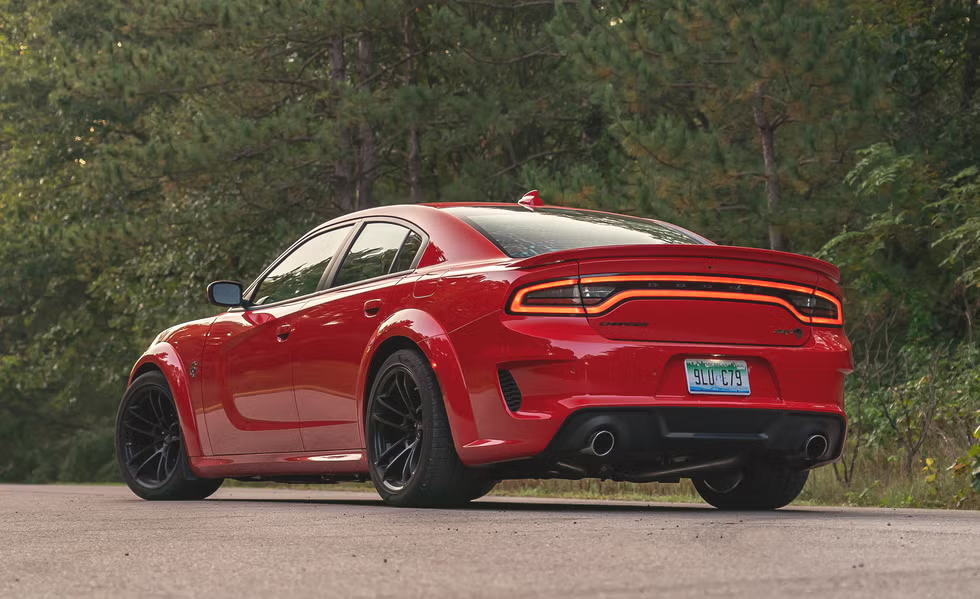
A Sedan That Still Thinks Like a Muscle Car
Despite its size and four-door practicality, the Charger remains fundamentally a muscle car in how it behaves. The chassis tuning favors stability and confidence, especially at speed, while the suspension strikes a balance between everyday comfort and controlled aggression. Push harder, and the car settles into corners with reassuring composure, its weight managed rather than masked.
Steering feedback is deliberate, not hyperactive, which suits the Charger’s personality. This is a car designed to cover ground quickly and confidently, not dart nervously at every input. The result is a driving experience that feels honest and predictable—qualities enthusiasts tend to value long after the novelty of peak horsepower fades.
Inside, the cabin mirrors this dual-purpose mindset. The layout is unapologetically driver-focused, with clear instrumentation and controls that prioritize function over flash. Materials feel robust, designed to withstand real use rather than impress in a showroom selfie. It’s a reminder that performance credibility often shows up in the details you interact with every day.
Why the Charger’s V-8 Strategy Still Makes Sense
The automotive industry is in the middle of a profound transition, and no one is pretending otherwise. Yet the Charger’s continued reliance on HEMI power isn’t denial—it’s differentiation. By doubling down on what it does best, Dodge positions the Charger as an alternative, not a compromise.
For enthusiasts who want a practical sedan without surrendering emotional engagement, the Charger occupies a shrinking but meaningful space. It offers performance that feels earned rather than engineered by committee. In doing so, it underscores a simple truth: there is still room in the modern market for cars that prioritize feel as much as figures.
The Charger’s V-8 trims don’t argue against the future. They simply make a compelling case for enjoying the present while it’s still available.


